California decouples from federal §168(k), how does that affect my Joshua Tree cost seg?
Your federal Year-1 deduction is the same as anywhere, 100% bonus depreciation under OBBBA. The California state side is where it differs. CA does not allow §168(k) bonus depreciation; instead, the reclassified property depreciates under normal MACRS straight-line on the CA Schedule CA D-1 (assets) parallel schedule. The federal §168(k) deduction is added back on your CA return, then state depreciation accrues over the recovery period. Net Year-1 effect: federal benefit ~$30K–$80K (large); CA benefit ~$1.5K–$5K (small first year, accruing more over Years 2-15). Combined Year-1 marginal: ~38-42% depending on bracket.
Does the San Bernardino County STR cap affect my cost segregation?
Operationally yes (it limits new STR permits in Joshua Tree town and adjacent areas to a hard cap). For cost segregation, no, your federal basis is your basis regardless of permit availability. If you already hold a permitted STR, the cap is favorable for property value (scarcity drives appreciation). If you're trying to enter the market, the cap means you typically acquire an existing permitted property at a premium. Cost seg eligibility is unaffected.
Why does Joshua Tree have such high STR FF&E density compared to other markets?
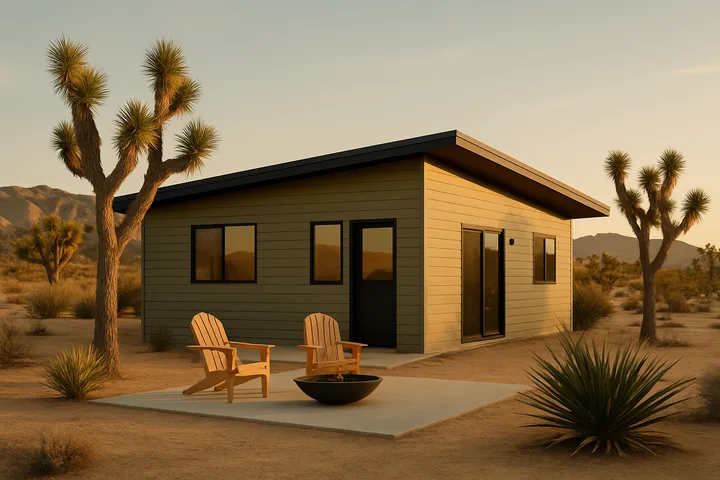
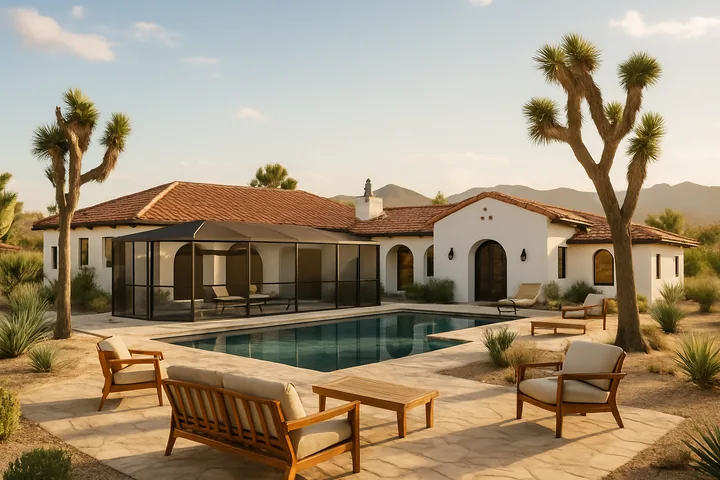
Joshua Tree is a 'design destination' STR market, guests pick by architectural style and aesthetic (mid-century modern, off-grid bunkhouses, geodesic domes, Spanish revival, architectural minimalist). Owners stock premium FF&E: designer furniture, premium art, kitchens with high-end appliances, outdoor stargazing setups, hot tubs, designer linens. FF&E typically runs $40K–$80K per property, well above national STR median. All 5-year personal property under MACRS bonus depreciation.
Can I cost seg a property I'm converting from primary residence to STR?
Yes, on the rental portion only. Conversion date establishes the basis, typically the lower of original cost basis or fair market value at conversion. If you're converting the entire property, full basis applies. If you're keeping part as primary residence (e.g., a casita STR while you live in the main house), an engineer scopes the rental-portion basis allocation. Common pattern in Joshua Tree where weekenders convert their second-home property to year-round STR.
How does Joshua Tree compare to Palm Springs or Phoenix?
Joshua Tree is more affordable to enter ($300K-$700K vs $700K-$2M+ in Palm Springs) and has higher STR yield per dollar of investment. Cost-seg math is similar to Palm Springs (both CA, both face §168(k) decoupling). Compared to Phoenix: less total state-side benefit (CA's parallel-schedule complexity vs AZ's clean §168(k) conformity), but Joshua Tree's lower entry price means higher cost-seg ROI per dollar invested. Both have ~27-29% reclassification on STR.
I'm doing a 1031 exchange, what's the cleanest move?
CA-to-CA 1031s are simplest, your parallel CA schedule continues on the new property. CA-to-out-of-state: CA tracking continues on the relinquished CA basis until eventual disposition; new (non-CA) property gets clean §168(k) federal treatment. Out-of-state-to-Joshua-Tree: fresh CA tracking starts on the new property. Your CPA handles the parallel-schedule mechanics, typical to lean on a CPA who specifically knows California depreciation rules.